Discoverability
Can the right people find you?
Search results, professional profiles, articles and owned content should reveal one coherent identity instead of disconnected fragments.

Personal brand strategy
Perception begins before contact
Before a conversation begins, people search your name, scan your digital presence, notice where your ideas appear and decide how seriously to take you. Personal branding is the deliberate architecture behind that perception.
Search results, professional profiles, articles and owned content should reveal one coherent identity instead of disconnected fragments.
Strong positioning connects what you say about yourself with visible signals that make your experience easier to evaluate and trust.
A strong personal brand leaves a distinctive impression after the search result, article, profile or meeting has disappeared from view.
A personal brand is not a collection of posts. It is the cumulative impression created by what people repeatedly discover, verify and remember about you.
The credibility gap
Expertise can exist long before recognition catches up. The problem begins when someone searches your name and finds an incomplete picture: fragmented profiles, weak search visibility, limited third-party context or valuable expertise buried beneath unrelated noise.


Search results should make it easier to understand who you are, what you know and why your perspective matters.
LinkedIn, websites, biographies and social profiles lose credibility when they present disconnected versions of the same person.
Relevant interviews, commentary and editorial visibility can give people additional places to understand your expertise.
Valuable perspectives create little reputational value when they are never structured, published or connected to your professional identity.
The gap is not always between competence and incompetence. Often, it is between what you know and what the market can actually see.
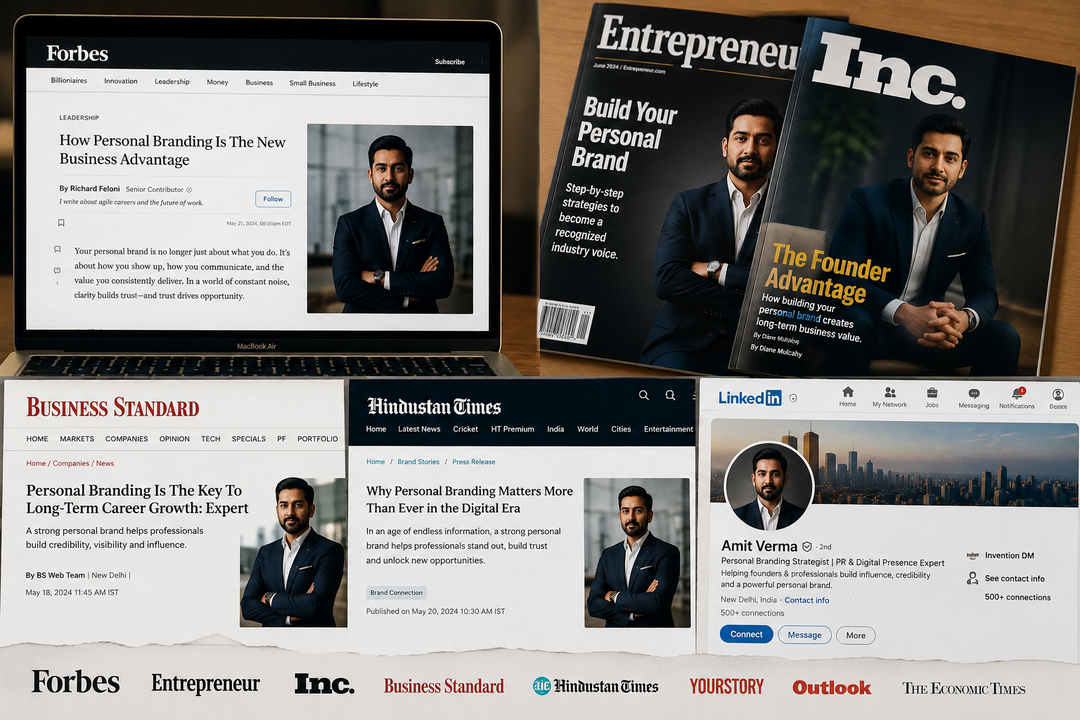
Trust architecture
People do not build confidence from a headline you write about yourself. They build it from the pattern of evidence surrounding your name. Search visibility, relevant media, professional profiles and consistent communication all contribute to how seriously your expertise is interpreted.
Your website, profiles, articles and indexed mentions collectively shape what people discover when they investigate your name.
Relevant media visibility provides additional context around your expertise and gives the market another place to evaluate your perspective.
Interviews, profiles, website copy and social communication should reinforce the same professional position rather than fragment it.
A coherent professional presence helps the quality of your digital presentation match the quality of the expertise behind it.
When these signals reinforce one another, your name becomes easier to understand, easier to evaluate and easier to remember.
The personal brand presence stack
A search result may introduce you. A profile may explain you. An article may demonstrate how you think. Media may add external context. None of these signals operates particularly well in isolation. Their real value appears when they begin reinforcing the same professional story.
Central signal
The recognisable professional idea people begin attaching to your name across every relevant point of discovery.
Your personal website, founder page, biography and controlled digital assets establish the version of your professional identity you can define directly and consistently.
Where you define yourself
Search results, indexed profiles, articles and entity signals shape the first picture people assemble when they investigate your name, expertise and professional relevance.
What discovery reveals
Articles, frameworks, commentary and original perspectives allow people to understand not only what you do, but how you think about the problems your market actually cares about.
What gives your name a point of view
Relevant interviews, expert commentary and third-party references create additional context around your expertise when they reinforce the professional narrative already being established.
Where others add context
LinkedIn, social channels, newsletters and repeated professional communication keep useful ideas circulating beyond a single appearance and help build familiarity over time.
How your ideas continue travelling
Search, media, websites, profiles and social communication become far more useful when every appearance reinforces one recognisable professional position.
What turns visibility into recognition
The difference is connection
Personal branding becomes stronger when each appearance helps explain the next one instead of forcing the audience to assemble disconnected fragments for themselves.
The objective is not to be everywhere. It is to make every relevant appearance reinforce the same idea about who you are, what you know and why your perspective deserves attention.
Who this is for
Different careers create different forms of visibility, but the underlying challenge is often the same. Before the meeting, before the referral, and before the conversation begins, people are already forming an impression of who you are and how much credibility your name holds.


The common pattern
That evaluation may happen through a search result, a LinkedIn profile, a media mention, a founder bio, a website, or a recommendation passed from one decision-maker to another. Personal branding matters most for people whose identity is already connected to trust, leadership, expertise, influence or commercial decision-making. In those cases, reputation is not decoration. It is infrastructure.
The more your name influences a decision, the more carefully people validate it.
What matters is whether every appearance supports the same professional identity.
Better trust often means better introductions, faster conversations and stronger opportunity flow.
When a company’s credibility is closely linked to the person leading it, founder visibility becomes part of brand trust, business development and strategic positioning.
Leadership seen before leadership met
For business builders who need their name to be recognised not only as the owner of a venture, but as a credible voice with a distinct point of view.
A business may open the door. Your identity deepens trust.
Senior professionals often need a public identity that reflects leadership, insight and authority beyond the job title printed on a business card.
Reputation that travels beyond the organisation
For experts whose work depends on being trusted quickly, understood clearly, and remembered for a particular capability or perspective.
Expertise is easier to trust when it is easier to verify
For individuals stepping into larger responsibility and wanting a professional identity that feels established, credible and independent in its own right.
From role inheritance to identity ownership
Authors, educators, speakers, advisors and visible experts benefit when their public presence reflects both the quality of their thinking and the seriousness of their work.
Recognition grounded in professional substance
One conclusion
Personal branding is not only for public personalities. It is increasingly valuable for the professionals, founders and decision-makers whose reputation shapes how seriously opportunities, introductions and conversations begin.
Your reputation, deliberately shaped
Every search result, article, media appearance, profile and introduction contributes to the way people interpret your name. Personal branding gives those signals direction, so your reputation reflects the substance behind your work instead of being left to chance.




The InventionDM view
The objective is not simply to make a person more visible. It is to connect professional identity, search presence, credible media context and consistent communication so that every relevant appearance helps people understand the same professional story.
You do not need to become someone else. You need the market to see the substance, perspective and professional value already behind your name.
If your professional reputation influences how clients, partners, investors or audiences evaluate you, the first step is understanding what your current presence is already communicating.
Personal brand strategy by InventionDM. Media, reputation and digital visibility.
Personal brand strategy
Perception begins before contact
Before a conversation begins, people search your name, scan your digital presence, notice where your ideas appear and decide how seriously to take you. Personal branding is the deliberate architecture behind that perception.
Search results, professional profiles, articles and owned content should reveal one coherent identity instead of disconnected fragments.
Strong positioning connects what you say about yourself with visible signals that make your experience easier to evaluate and trust.
A strong personal brand leaves a distinctive impression after the search result, article, profile or meeting has disappeared from view.
A personal brand is not a collection of posts. It is the cumulative impression created by what people repeatedly discover, verify and remember about you.
The credibility gap
Expertise can exist long before recognition catches up. The problem begins when someone searches your name and finds an incomplete picture: fragmented profiles, weak search visibility, limited third-party context or valuable expertise buried beneath unrelated noise.
Search results should make it easier to understand who you are, what you know and why your perspective matters.
LinkedIn, websites, biographies and social profiles lose credibility when they present disconnected versions of the same person.
Relevant interviews, commentary and editorial visibility can give people additional places to understand your expertise.
Valuable perspectives create little reputational value when they are never structured, published or connected to your professional identity.
The gap is not always between competence and incompetence. Often, it is between what you know and what the market can actually see.
Trust architecture
People do not build confidence from a headline you write about yourself. They build it from the pattern of evidence surrounding your name. Search visibility, relevant media, professional profiles and consistent communication all contribute to how seriously your expertise is interpreted.
Your website, profiles, articles and indexed mentions collectively shape what people discover when they investigate your name.
Relevant media visibility provides additional context around your expertise and gives the market another place to evaluate your perspective.
Interviews, profiles, website copy and social communication should reinforce the same professional position rather than fragment it.
A coherent professional presence helps the quality of your digital presentation match the quality of the expertise behind it.
When these signals reinforce one another, your name becomes easier to understand, easier to evaluate and easier to remember.
The personal brand presence stack
A search result may introduce you. A profile may explain you. An article may demonstrate how you think. Media may add external context. None of these signals operates particularly well in isolation. Their real value appears when they begin reinforcing the same professional story.
Central signal
The recognisable professional idea people begin attaching to your name across every relevant point of discovery.
Your personal website, founder page, biography and controlled digital assets establish the version of your professional identity you can define directly and consistently.
Where you define yourself
Search results, indexed profiles, articles and entity signals shape the first picture people assemble when they investigate your name, expertise and professional relevance.
What discovery reveals
Articles, frameworks, commentary and original perspectives allow people to understand not only what you do, but how you think about the problems your market actually cares about.
What gives your name a point of view
Relevant interviews, expert commentary and third-party references create additional context around your expertise when they reinforce the professional narrative already being established.
Where others add context
LinkedIn, social channels, newsletters and repeated professional communication keep useful ideas circulating beyond a single appearance and help build familiarity over time.
How your ideas continue travelling
Search, media, websites, profiles and social communication become far more useful when every appearance reinforces one recognisable professional position.
What turns visibility into recognition
The difference is connection
Personal branding becomes stronger when each appearance helps explain the next one instead of forcing the audience to assemble disconnected fragments for themselves.
The objective is not to be everywhere. It is to make every relevant appearance reinforce the same idea about who you are, what you know and why your perspective deserves attention.
Who this is for
Different careers create different forms of visibility, but the underlying challenge is often the same. Before the meeting, before the referral, and before the conversation begins, people are already forming an impression of who you are and how much credibility your name holds.
The common pattern
That evaluation may happen through a search result, a LinkedIn profile, a media mention, a founder bio, a website, or a recommendation passed from one decision-maker to another. Personal branding matters most for people whose identity is already connected to trust, leadership, expertise, influence or commercial decision-making. In those cases, reputation is not decoration. It is infrastructure.
The more your name influences a decision, the more carefully people validate it.
What matters is whether every appearance supports the same professional identity.
Better trust often means better introductions, faster conversations and stronger opportunity flow.
When a company’s credibility is closely linked to the person leading it, founder visibility becomes part of brand trust, business development and strategic positioning.
Leadership seen before leadership met
For business builders who need their name to be recognised not only as the owner of a venture, but as a credible voice with a distinct point of view.
A business may open the door. Your identity deepens trust.
Senior professionals often need a public identity that reflects leadership, insight and authority beyond the job title printed on a business card.
Reputation that travels beyond the organisation
For experts whose work depends on being trusted quickly, understood clearly, and remembered for a particular capability or perspective.
Expertise is easier to trust when it is easier to verify
For individuals stepping into larger responsibility and wanting a professional identity that feels established, credible and independent in its own right.
From role inheritance to identity ownership
Authors, educators, speakers, advisors and visible experts benefit when their public presence reflects both the quality of their thinking and the seriousness of their work.
Recognition grounded in professional substance
One conclusion
Personal branding is not only for public personalities. It is increasingly valuable for the professionals, founders and decision-makers whose reputation shapes how seriously opportunities, introductions and conversations begin.
Your reputation, deliberately shaped
Every search result, article, media appearance, profile and introduction contributes to the way people interpret your name. Personal branding gives those signals direction, so your reputation reflects the substance behind your work instead of being left to chance.
The InventionDM view
The objective is not simply to make a person more visible. It is to connect professional identity, search presence, credible media context and consistent communication so that every relevant appearance helps people understand the same professional story.
You do not need to become someone else. You need the market to see the substance, perspective and professional value already behind your name.
If your professional reputation influences how clients, partners, investors or audiences evaluate you, the first step is understanding what your current presence is already communicating.
Personal brand strategy by InventionDM. Media, reputation and digital visibility.